The world of metaphysical education has been caught in a legal storm involving the University of Metaphysical Sciences (UMS) and the International Metaphysical Ministry (IMM). In this article, The University of Metaphysical Sciences Lawsuit, we discuss an ongoing dispute that has spanned several years, and raised questions about trademark rights, legal obligations, and the impact of litigation on institutions offering spiritual and metaphysical education.
Background of the Lawsuit
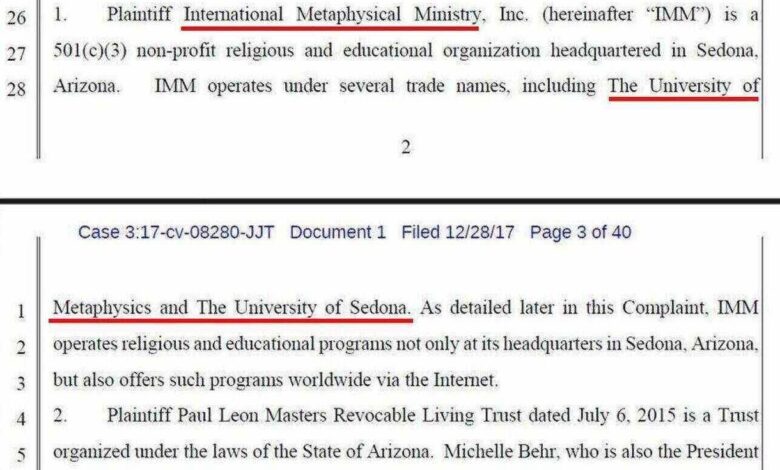
The first legal action in this saga was initiated by the International Metaphysical Ministry (IMM) on December 28, 2017. IMM alleged that UMS had engaged in trademark infringement, leading to a legal battle that was eventually settled on June 10, 2019. However, tensions between the two institutions did not end there.
On October 14, 2021, IMM filed another lawsuit against UMS, this time accusing the university of breaching the terms of the previous settlement agreement. The case has since moved through the legal system, and as of August 27, 2024, the United States District Court for the Northern District of California has scheduled the trial for June 16, 2025.
Arguments Presented by the International Metaphysical Ministry (IMM)
IMM has positioned itself as the aggrieved party in this legal dispute. The organization’s primary arguments include:
- Trademark Infringement – IMM initially sued UMS for allegedly using names, symbols, or materials that closely resembled IMM’s trademarks, potentially causing confusion among students and the public.
- Breach of Settlement Agreement – IMM contends that UMS did not adhere to the conditions outlined in the 2019 settlement, leading to the need for further legal action.
- Protection of Intellectual Property – IMM asserts that its legal actions are necessary to safeguard its intellectual property and prevent dilution of its brand identity within the metaphysical education sector.
Arguments Presented by the University of Metaphysical Sciences (UMS)
On the other hand, UMS has defended itself against IMM’s claims with the following counterarguments:
- Baseless Litigation Claims: UMS describes IMM’s lawsuits as “predatory litigation” designed to financially burden and suppress competition rather than address legitimate legal grievances.
- Lack of Found Violations: UMS maintains that it has not been found guilty of any wrongdoing in previous legal proceedings and insists that it continues to operate lawfully.
- Right to Exist and Compete: The university argues that it is an independent entity with the right to provide metaphysical education and should not be unfairly targeted by a competitor in the same field.
Implications for Metaphysical Education
The lawsuit raises concerns about the legal landscape for institutions offering metaphysical education, many of which operate in a relatively niche academic space. If IMM prevails in its claims, the case could set a precedent regarding the enforcement of intellectual property and trademark rights within this sector. Conversely, if UMS successfully defends itself, it may signal a broader discussion about the role of litigation in competitive business practices among spiritual education providers.
Current Status and Court Proceedings
The case is now being heard in the United States District Court for the Northern District of California. A recent court ruling has set the trial date for June 16, 2025, indicating that both sides will continue to present their arguments before a judge.
Read Also: What to Do An Employment Lawyer To Protect Employee
Legal Experts’ Analysis
1. Trademark and Intellectual Property Considerations
Trademark law protects brand identity and prevents consumer confusion. Legal professionals suggest that IMM’s original claim may have been rooted in protecting its intellectual property. However, they also highlight the complexities in proving a violation, especially in industries that operate within broad, loosely defined concepts like metaphysics.
2. Contractual Obligations and Settlement Compliance
The second lawsuit hinges on whether UMS adhered to the 2019 settlement agreement. Legal analysts indicate that if IMM can prove a breach, UMS may face significant penalties. However, proving such a breach requires clear contractual violations, which is often a gray area in legal disputes.
3. Predatory Litigation or Legitimate Legal Action?
One of the primary arguments made by UMS is that these lawsuits are a form of “predatory litigation,” designed to drain financial resources rather than seek justice. Legal experts acknowledge that while strategic lawsuits against competitors are not uncommon, courts generally look for concrete evidence rather than claims of bad faith alone.
What’s Next on University of Metaphysical Sciences Lawsuit?
As the trial date approaches, both parties remain firm in their positions. The result could have significant implications for the metaphysical education community, influencing how institutions protect their intellectual property and navigate competitive pressures.
For those interested in metaphysical education, this legal battle serves as a reminder of the complexities involved in running institutions that straddle the line between academia and spirituality. As new developments arise, observers will be watching closely to see how this case unfolds and what it means for the future of metaphysical studies.
Legal professionals predict several possible outcomes for this case:
- Settlement Before Trial: Many lawsuits are resolved before reaching the courtroom. A settlement could be financially favorable for both parties and avoid further legal costs.
- Judgment in Favor of IMM: If IMM successfully proves its claims, UMS may have to pay damages or alter its branding and operations.
- Judgment in Favor of UMS: If the court finds insufficient evidence of wrongdoing, UMS would continue its operations without legal constraints from IMM.
Final Thoughts
The ongoing legal battle between UMS and IMM is a case study in the complexities of trademark law, settlement agreements, and competition in niche industries. Legal experts suggest that the outcome will set a precedent for how similar cases are handled in the future. Until then, the metaphysical community and legal professionals will be watching closely as this case unfolds.
Editorial Note On University of Metaphysical Sciences Lawsuit
The lawsuit between UMS and IMM has the potential to reshape the landscape of metaphysical education. Whether it results in financial consequences, institutional reforms, or shifts in public perception, the case underscores the importance of legal clarity and fair competition in the field. As the trial date approaches, the metaphysical education community will be watching closely to see how this legal battle unfolds and what lasting effects it may have.