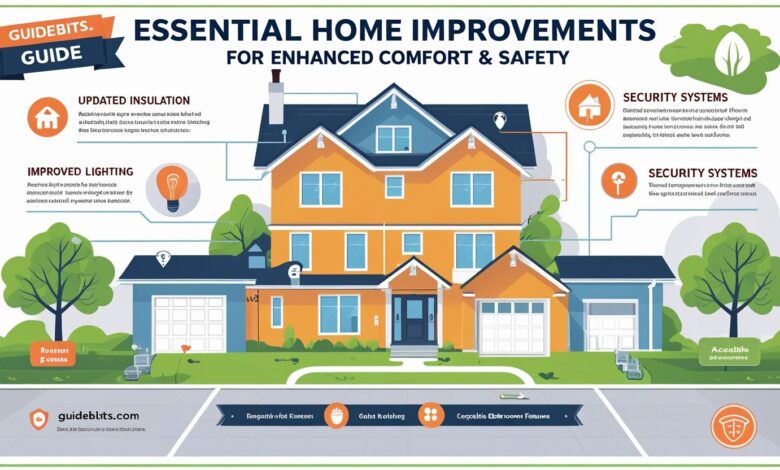
Introduction: Why Essential Home Improvements Matter
Your home is more than just a shelter—it’s your sanctuary, your comfort zone, and your family’s protection. With the rising awareness around sustainable living, smart safety, and energy efficiency, making essential home improvements is no longer a luxury—it’s a necessity.
Whether you’re planning to stay in your home for years or preparing it for resale, specific upgrades can dramatically improve comfort, safety, and long-term value. This comprehensive guide walks you through the top essential home improvements to make your space smarter, safer, and more livable.
Improving Indoor Comfort
Upgrading your home for comfort doesn’t always mean major renovations. Sometimes, small, strategic enhancements can make a big difference in how your home feels and functions.
1. Insulation and Weatherproofing
Proper insulation is key to maintaining indoor temperature and reducing energy bills.
Why It’s Important:
- Keeps home warmer in winter and cooler in summer
- Reduces utility bills by up to 30%
- Decreases carbon footprint
Key Areas to Insulate:
- Attic and roof
- Wall cavities
- Basement and crawl spaces
- Windows and doors (using weather stripping and caulking)
| Area | Recommended Insulation Type |
|---|---|
| Attic | Fiberglass batts or blown-in cellulose |
| Walls | Spray foam or rigid foam boards |
| Floors | Mineral wool or foam insulation sheets |
2. Smart Thermostats and HVAC Upgrades
Smart thermostats adjust your home’s temperature based on your habits and preferences.
Benefits:
- Remote control via smartphones
- Energy-saving automation
- Integration with HVAC systems
Popular Options: Google Nest, Ecobee, Honeywell Smart Thermostats
3. Window Upgrades
Old, drafty windows are not only uncomfortable—they also hike up your energy bills.
Best Upgrades:
- Double or triple-glazed windows
- Low-E (Low Emissivity) glass for better insulation
- UV filtering films to block heat and harmful rays
Safety Upgrades That Protect Your Family
Comfort is incomplete without safety. Investing in these essential safety improvements can give you peace of mind and reduce the risk of accidents or intrusions.
4. Electrical Panel and Wiring Updates
Outdated wiring is a fire hazard. Modernizing your electrical system ensures it can handle today’s appliance-heavy lifestyles.
Signs You Need an Upgrade:
- Flickering lights
- Tripping breakers
- Warm outlets
Recommended Fixes:
- Install GFCI outlets in kitchens, bathrooms, and outdoors
- Upgrade to a 200-amp service panel
- Add surge protectors
5. Smoke and Carbon Monoxide Detectors
Install smart detectors that send alerts to your phone and can integrate with home systems.
| Detector Type | Placement |
|---|---|
| Smoke | Inside and outside each bedroom |
| Carbon Monoxide | Near sleeping areas and gas appliances |
Tip: Replace batteries every 6 months and test monthly.
6. Anti-Slip Flooring and Stair Safety
Slips and falls are among the most common home injuries—especially in homes with elderly members or kids.
Upgrades:
- Anti-slip stair treads
- Rubber mats in bathrooms and kitchens
- Non-slip vinyl or textured tiles
- Install handrails and grab bars
7. Home Security Systems
A modern home security system adds a protective layer and boosts your home’s resale value.
Key Features to Consider:
- Motion detectors
- Door/window sensors
- HD cameras with remote monitoring
- Video doorbells (e.g., Ring, Nest Hello)
- Smart locks with keyless entry
Enhancements for Health and Air Quality
Your home’s air quality directly affects your health. Investing in these essential improvements creates a healthier indoor environment.
8. Air Purifiers and Ventilation Systems
Clean air prevents respiratory problems and allergies.
Best Solutions:
- HEPA air purifiers
- Whole-house ventilation systems
- Dehumidifiers in damp areas (like basements)
- Bathroom and kitchen exhaust fans
9. Mold-Resistant Materials
Mold is a serious health hazard. Prevent it by using the right building materials, especially in moisture-prone areas.
Suggestions:
- Mold-resistant drywall in bathrooms
- Waterproof basement sealants
- Anti-microbial paints
- Regularly check for leaks in roofs and pipes
Energy-Efficient Improvements for Cost Savings
Sustainability and savings go hand-in-hand. These essential home upgrades not only reduce your environmental impact but also lower your utility bills.
10. Solar Panels
Going solar is more accessible and affordable than ever.
Advantages:
- Significant savings on electricity
- Tax credits and local rebates
- Long-term return on investment
Types of Systems:
| Type | Description |
|---|---|
| Grid-Tied | Works with local utility grid |
| Off-Grid | Fully independent; uses batteries |
| Hybrid | Combines both for flexibility |
11. LED Lighting
Switching to LEDs is a quick and affordable upgrade.
- Uses 75% less energy
- Lasts 25 times longer than incandescent bulbs
- Available in multiple color temperatures
12. Energy Star Appliances
Replace old appliances with Energy Star-certified versions for guaranteed efficiency.
Recommended Appliance Replacements:
- Refrigerators
- Washing machines
- Dishwashers
- Air conditioners
- Water heaters
Smart Technology for Modern Living
Smart homes are not just about convenience—they improve security, comfort, and efficiency.
13. Smart Lighting and Plugs
Smart plugs and lights let you control devices with your phone or voice assistant.
Features to Look For:
- Scheduling and automation
- Integration with Alexa, Google Assistant
- Energy tracking
14. Smart Water Leak Detectors
These devices alert you instantly if a pipe bursts or there’s a water leak—preventing costly damage.
Ideal Locations to Install:
- Under kitchen sinks
- Behind toilets
- Near water heaters
- Basements
15. Automated Blinds and Shades
Motorized window coverings are not only stylish but also energy-efficient.
Benefits:
- Scheduled opening/closing for heat control
- Privacy at the touch of a button
- UV protection for furniture
Outdoor Improvements That Add Comfort and Safety
Don’t forget your outdoor spaces—especially if you live in areas with variable weather or security concerns.
16. Exterior Lighting and Motion Sensors
Proper lighting enhances security and usability of your outdoor spaces.
Ideas:
- Motion sensor floodlights
- Pathway solar lights
- Deck and patio lighting
17. Secure Fencing and Gates
Security and privacy can be improved by upgrading your fencing.
- Use pressure-treated wood, vinyl, or metal
- Lockable gates
- Add decorative elements to enhance curb appeal
18. Storm-Resistant Roofing
If you live in a storm-prone area, investing in high-impact roofing is essential.
Options:
- Metal roofing
- Asphalt shingles rated for high winds
- Clay or concrete tiles
Conclusion: Plan, Prioritize, and Execute
Making essential home improvements is an investment in your family’s comfort, safety, and peace of mind. Whether you’re fixing drafts, upgrading security, or embracing smart tech, every step adds up to a more livable and efficient home.
Quick Prioritization Checklist:
| Priority Level | Improvements |
|---|---|
| High | Insulation, smoke detectors, security systems |
| Medium | Smart thermostats, LED lights, mold-resistant materials |
| Low | Automated blinds, smart plugs, exterior lighting |
Start small, budget wisely, and tackle projects one at a time. Over time, your home will become a safer, smarter, and more serene place to live.
FAQ: Essential Home Improvements
Q1: What home improvement adds the most value?
A: Kitchen remodels, bathroom upgrades, and energy-efficient window installations often offer the best ROI.
Q2: How do I prioritize home improvements?
A: Focus first on safety (electrical, smoke detectors), then comfort (insulation, HVAC), and finally convenience (smart tech, aesthetics).
Q3: Are smart home upgrades worth it?
A: Yes, they improve convenience, increase energy efficiency, and enhance security—often increasing resale value.
Q4: What’s the average cost for essential home improvements?
A: It varies, but minor improvements can start from $500–$2,000, while major ones (roofing, solar panels) can exceed $10,000.
Q5: Can I do any improvements myself?
A: Absolutely. Simple projects like weather stripping, installing smart plugs, or replacing light fixtures are DIY-friendly.